How Can Circularity Become an Experience?
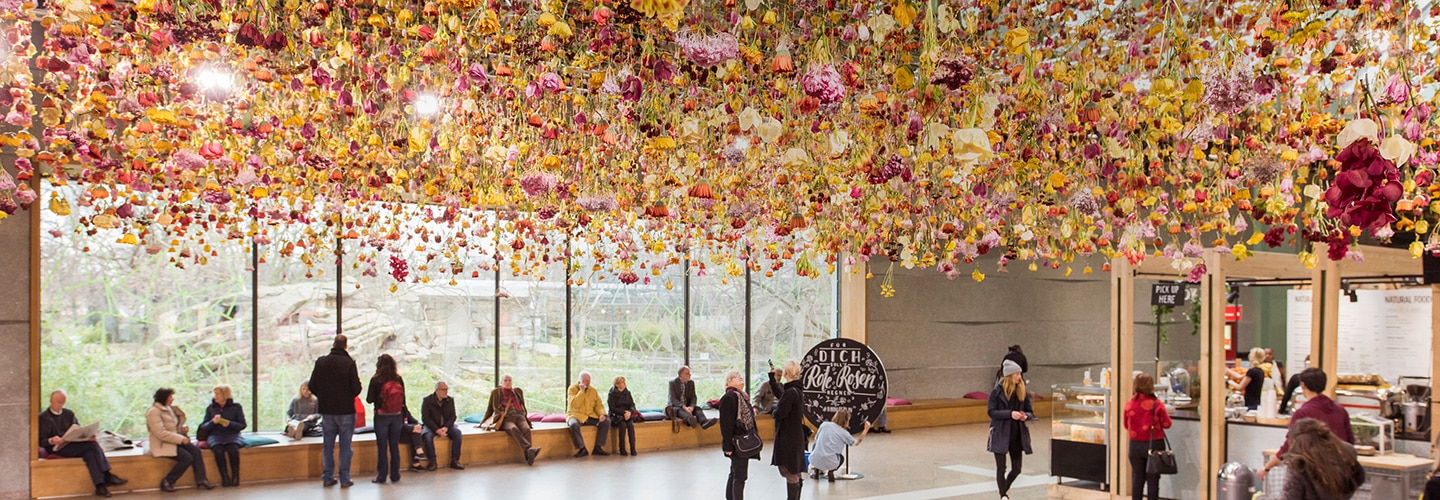
Circular design challenges our habitual ways of thinking and behaving. It opens up opportunities to rethink design and look at materials from a different perspective. In particular, reusing and recycling materials can create entirely new experiences and interactions within a space.
It is about more than simply using resources efficiently. It is also about re-examining our consumption habits and the value of the world around us. Materials take on a new meaning when we understand their history, discover their potential and experience how something new can emerge from what already exists.
In this way, a brand’s purpose also comes to life: shaping a future-ready world, promoting a sustainable economy and protecting our planet. Through circular design, circularity is not just communicated – it becomes something people can experience first-hand.
That is why I would like to see more courage to make a real difference through circular thinking, circular design and circular construction. We should not be afraid to explore new paths, challenge established perspectives and develop new ways of looking at things. This is precisely where the opportunity lies to create innovative solutions that inspire people while making a positive contribution.
Can Circular Design Be Economically Viable?
This question comes up frequently. My recommendation is to start with concrete pilot projects and then develop ways to scale the insights gained. The more we work with circular design, the more expertise we build – and the more cost-effective we can become in developing and implementing solutions.
Sustainability is increasingly becoming economically attractive, too. Raw materials are becoming more expensive, while approaches such as urban mining – recovering materials from existing buildings and infrastructure – are becoming increasingly established. Rather than simply disposing of materials, preserving their value and putting them back to use is becoming ever more relevant from an economic perspective.
Circular design also means working innovatively. It allows companies to build a competitive advantage through their expertise while differentiating themselves through their own purpose. By consistently integrating circularity into their design approach and processes, companies can develop new solutions and position themselves for the future.
What matters is that we drive this development forward together. By sharing experiences, building networks and establishing suitable processes collaboratively, we can develop circular solutions that are not only environmentally sound but also economically viable and market-ready.
Let’s pool our strengths, launch pilot projects together and work towards making circularity scalable. The more we learn from one another and build on successful approaches, the greater our collective impact will be in shaping a future-ready economy.